Introduction: CCTV stands for closed-circuit television and is commonly known as video surveillance. “Closed-circuit” means broadcasts are, usually transmitted to a limited (closed) number of monitors, unlike “regular” TV, which is broadcast to the public at large. CCTV technology was first developed in 1942 by German scientists to monitor the launch of V2 rockets. It was later used by American scientists during the testing of the atomic bomb. CCTV is a critical security component for all facilities. Video Surveillance helps identify security incidents and take action. This can be taken care of with 24 x 7 CCTV monitoring services.
How does CCTV work?
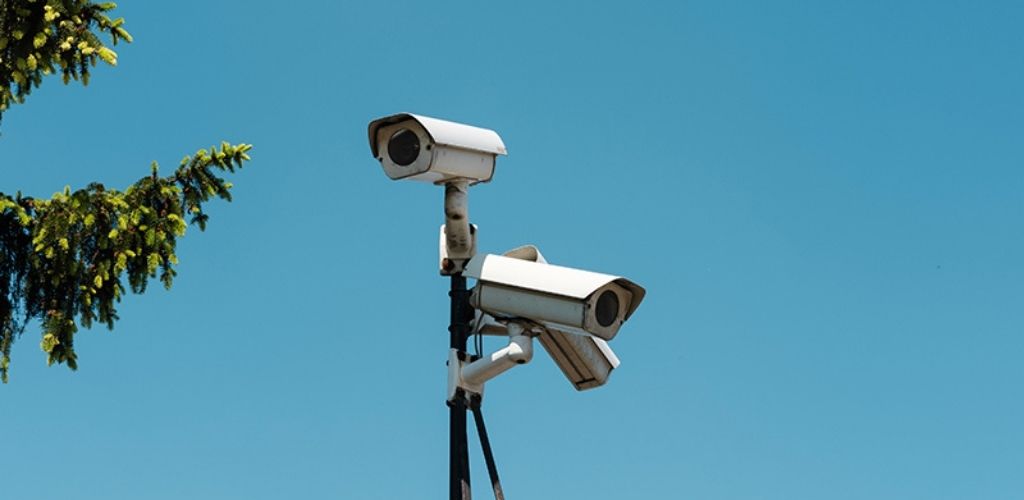
The sequence of images is picked up by the camera, which is transmitted as a signal that passes on to the recording device and display device. The camera itself captures the video source. A camera records images through the lens using image sensors. These images (and often audio too) are transmitted to the recorder or tape, either wirelessly or by cable. Recorders may use analytical software and other smart technologies to scan the data and send automated alerts to either humans or other systems and devices. This Video Management Software records, stores and analyzes video feeds. The software is often self-learning, using machine learning algorithms that utilize functionality like motion detection, face recognition, people counting, etc. The monitor can be passively (through software) or actively (by people) monitored.