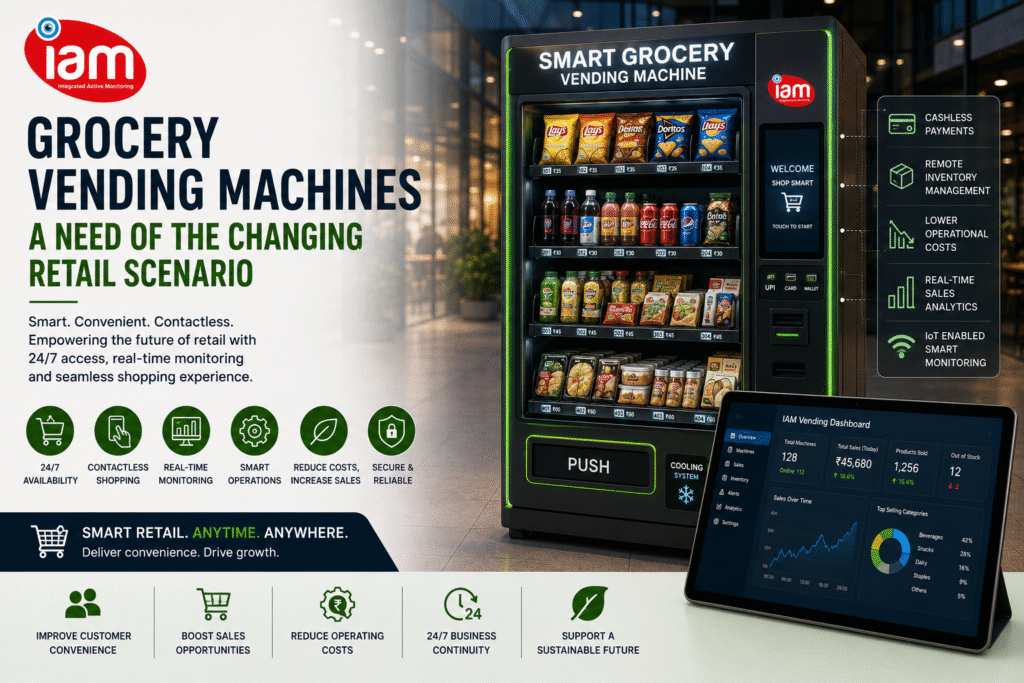
Are Grocery Vending Machines the Answer to a Changing Retail Landscape?
The vending machine is not a new idea. The first modern coin-operated machines appeared in London in the early 1880s, dispensing postcards at railway stations and post offices — a novelty that quietly turned into one of retail’s most durable formats. Nearly a century and a half later, the concept has proven so effective that Japan now runs over 5.5 million machines, roughly one for every 23 people, the highest density on earth. They dispense everything from hot and cold food to juices, tickets, and daily essentials, and they do it around the clock without a single staff member on site.
So here’s the question worth asking as retail itself shifts under pressure: is the humble vending machine, reborn as a smart grocery kiosk, actually one of the more sensible bets a retailer can make right now?
The shift that put vending back in the spotlight
Retail behaviour has changed in ways that happen to play directly to vending’s strengths.
Shoppers increasingly want convenience without friction — quick, contactless, unmanned transactions for the everyday items they don’t want to make a full store trip for. The habit of minimising crowded shopping visits, accelerated during the pandemic and now simply part of how many people buy, hasn’t reversed. People want essentials available near where they live and work, on their schedule, with a tap on their phone rather than a queue at a till.
That’s a demand curve a physical store struggles to serve profitably. Keeping a staffed outlet open 24/7 for a handful of late-night purchases makes no economic sense. A grocery vending machine does exactly that — sitting in an office lobby, a housing society, or a commercial complex, selling all day and night at almost no marginal staffing cost. For a retail business, it’s a way to extend reach into locations and hours that a conventional store could never justify.
From coin box to intelligent retail endpoint
The reason this matters now, and didn’t a decade ago, is that the machine itself has fundamentally changed. The old coin-operated box has become a connected retail unit.
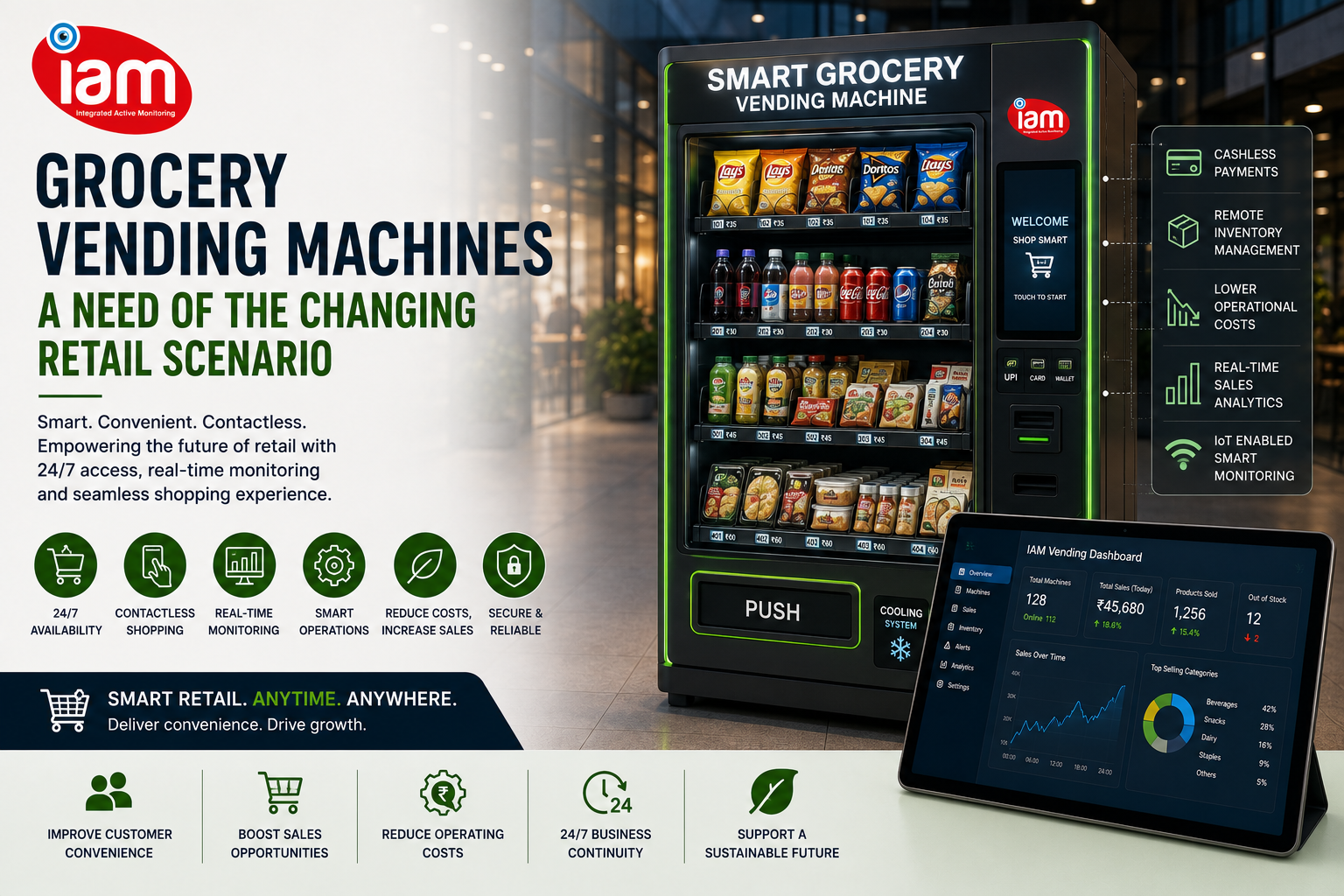
The grocery vending machine offered by Smart IAM is built on exactly this modern model. It runs on a smartphone interface for touch-less buying and contactless digital payment, so no cash changes hands and the whole transaction is hygienic and quick. Behind that simple front-end sits real-time data analytics — the machine reports what’s selling, what’s running low, and how consumption patterns shift by location and time of day.
That connected layer is what turns a vending machine from a dumb dispenser into a genuine business tool. It’s the same principle driving the wider move toward smarter, automated retail: the value isn’t just the sale, it’s the intelligence the system captures around every sale.
Why the economics work for a retailer
For the business weighing whether to deploy them, grocery vending machines stack up on several fronts at once.
Round-the-clock revenue, minimal overhead. The machine sells 24/7 with no staff roster, no shift costs, and a tiny physical footprint. It opens up revenue in hours and micro-locations a staffed store simply can’t cover.
Lower operating costs, healthier margins. Contactless, unmanned operation strips out much of the cost structure of a traditional outlet, which is what makes the per-unit economics attractive to operators.
Rich consumer data. Every purchase feeds insight — what moves, where, and when. For FMCG brands and operators alike, that data streamlines the supply chain and sharpens what gets stocked, in a way an anonymous cash sale never could.
New placement opportunities. Because the unit is self-contained and unmanned, it can go where a shop can’t: inside offices, residential societies, campuses, transit points, and commercial spaces — meeting customers exactly where the demand sits.
There’s a sustainability angle too. Just as reverse-vending machines reward people for returning bottles and cans, the broader push toward smart, efficient retail infrastructure fits the same direction of travel — less waste, tighter stock control, and operations you can actually measure and optimise.
Vending as one piece of a connected store
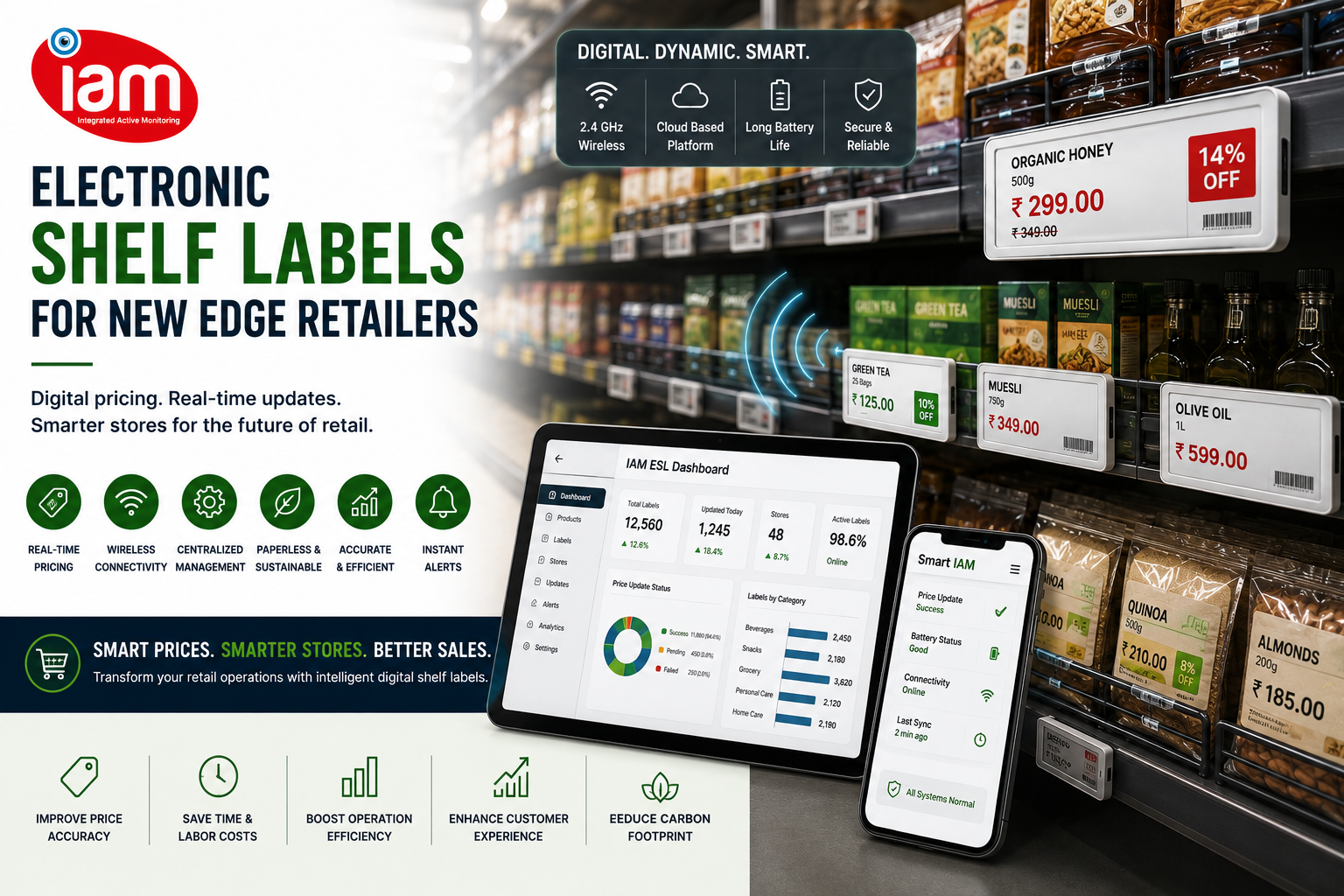
A grocery vending machine works best not as a standalone gadget but as part of a retailer’s wider intelligent-retail setup. The analytics it generates are far more valuable when they sit alongside the rest of the picture — footfall counting and heat-mapping to understand where and when demand concentrates, and electronic shelf labels and digital pricing so pricing stays consistent across every touchpoint, staffed or unmanned.
Tie those together and the vending unit stops being an isolated experiment and becomes a genuine extension of the store — which is precisely the connected retail approach Smart IAM is built around.
So, are they a need or a novelty?
The honest answer: for the right retailer, in the right location, grocery vending machines are no longer a novelty — they’re a practical response to how people now want to buy. They extend a business into hours and places a physical store can’t reach, run lean, and generate data that makes the whole operation smarter. The technology that held them back for a century — clunky, cash-only, blind to what it was selling — is exactly what’s now been solved.
The changing retail landscape rewards convenience, contactless service, and measurable operations. Grocery vending machines deliver all three.
Curious whether a smart vending deployment fits your business? Talk to Smart IAM about grocery vending machines.