Footfall Counting: How Analyzing Store Traffic Turns Guesswork Into Growth
Ask most store owners how business was last week and you’ll get a feeling, not a number. “Busy.” “Slow.” “Better than the week before, I think.” That instinct is the single most expensive habit in retail — because almost every decision that follows it, how many staff to roster, whether a promotion worked, why sales dipped, is being made on a guess.
Here’s the uncomfortable truth hiding inside that guess: you already track your sales down to the rupee, but you have no idea how many people walked in to not buy. And that number — the gap between who entered and who purchased — is where your real growth is sitting, invisible. Footfall counting is what makes it visible.
What footfall counting actually is
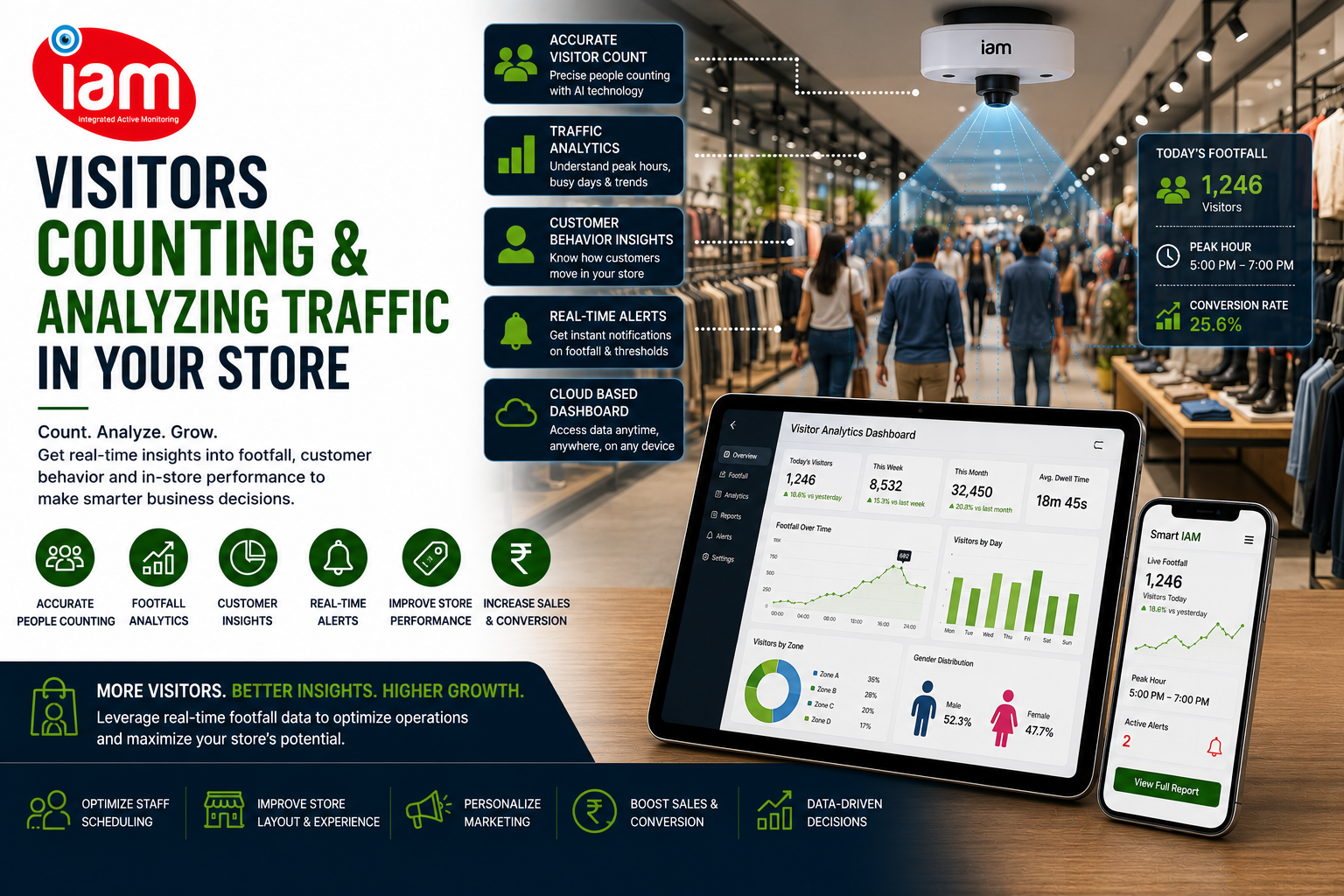
Footfall counting, also called people counting, is the automated measurement of how many people enter and exit your store, when they arrive, and how that traffic moves through the day, the week, and the season.
Instead of a security guard’s rough tally — which is easy to get wrong and, frankly, easy to manipulate — sensors mounted at every entry and exit capture accurate, bi-directional counts and feed them to cloud software in real time. The result is a precise, continuous record of your store’s traffic that you can actually analyze, compare, and act on.
The people counting solution from Smart IAM, powered by its AI-driven Ginti.ai footfall analytics platform, is built for exactly this. It delivers real-time footfall data, visitor demographics, and historical trends across retail stores, malls, supermarkets, offices, and smart buildings — turning raw traffic into the insight a business runs on.
The one number that changes everything: conversion rate
The moment you count footfall, you unlock the metric that matters more than almost any other in retail — conversion rate: the percentage of visitors who actually buy.
Conversion rate is simply transactions divided by visitors. Without footfall data, you can’t calculate it at all — you’re flying blind on the most important efficiency measure your store has. With it, the picture sharpens instantly. Consider two stores that both did 100 sales today:
- Store A had 400 visitors → a 25% conversion rate.
- Store B had 1,000 visitors → a 10% conversion rate.
Identical sales. Completely different problems. Store A converts well and simply needs more traffic — spend on marketing. Store B has plenty of traffic and is losing it inside — the problem is layout, staffing, stock, or service, and no amount of advertising will fix it. Without footfall, both owners would high-five over “100 sales” and never see that Store B is quietly bleeding nine out of ten opportunities.
That single distinction — a traffic problem versus a conversion problem — is worth more than most retailers spend on analytics in a year.
What footfall data lets you actually do
Once traffic becomes a measurable number, decisions that used to be gut calls become evidence-based ones.
Staff to your real traffic. Match your roster to when customers actually arrive, not to a fixed schedule. Footfall reveals your true peak hours and quiet stretches, so you stop overstaffing dead afternoons and understaffing the rush that costs you sales.
Prove what marketing works. Ran a campaign, a sale, a new window display? Footfall shows whether it pulled people through the door. You can finally connect spend to traffic and stop guessing which promotions earn their cost — the same evidence-based thinking behind retail automation as a whole.
Compare stores fairly. Across a chain, footfall lets you benchmark locations on conversion, not just raw sales, so a small high-converting store gets the credit it deserves and a high-traffic underperformer gets the attention it needs. It makes multi-store profitability legible at a glance.
See the whole customer journey. Counting entries is the start. Paired with dwell-time and heat-mapping analytics, footfall extends into where people go and how long they linger — turning a headcount into a full map of customer behaviour inside your space.
Beyond retail: any space with people has footfall worth measuring
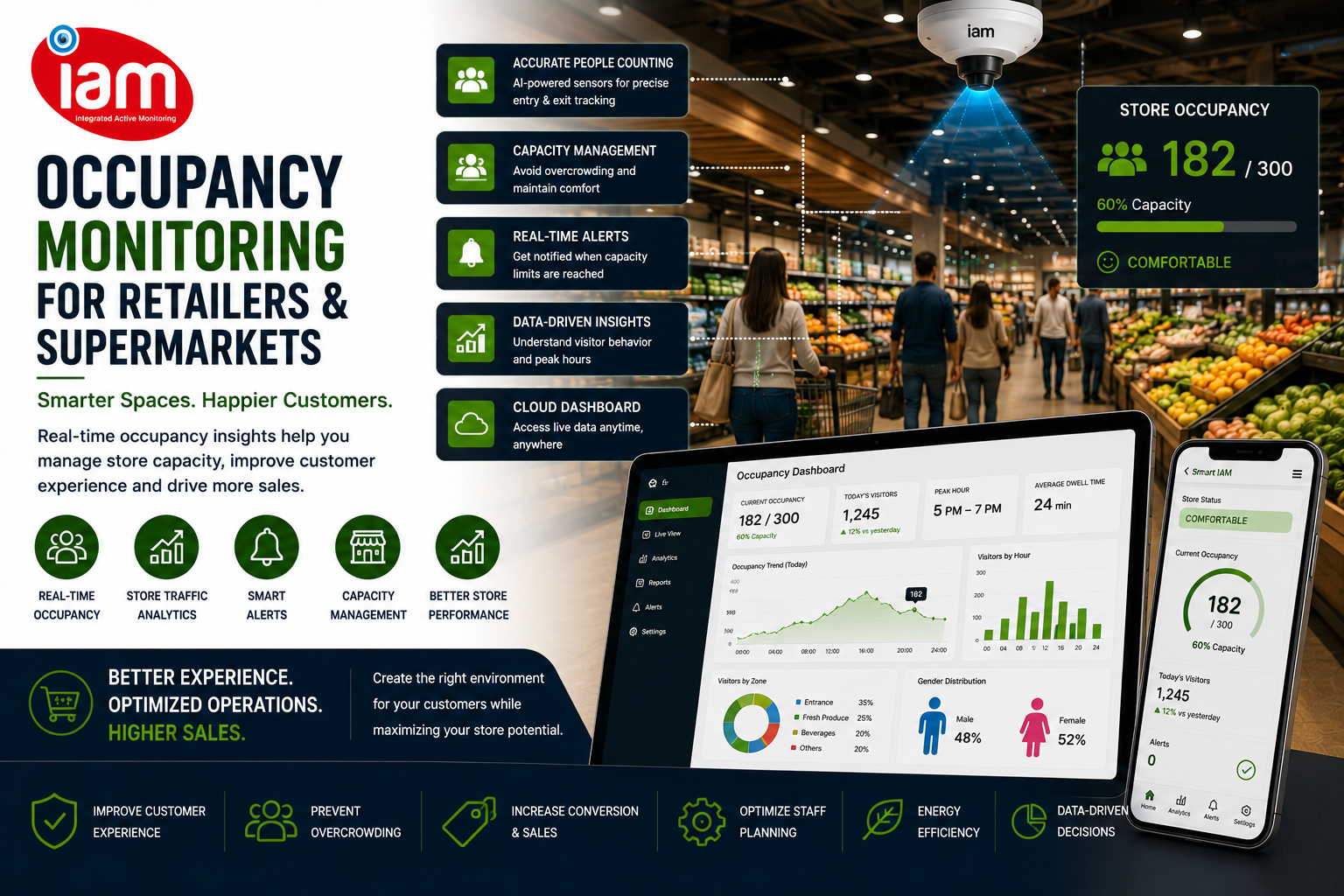
Though retail is where footfall counting proves itself fastest, the same capability serves anywhere people gather. Malls use it to price tenancy and measure location effectiveness. Offices use it for workspace utilization and occupancy planning. Airports, museums, libraries, and smart buildings all run better when they can see their own traffic. The underlying question — how many people, where, and when — is universal, and the answer drives everything from staffing to energy use.
Modern systems do this while respecting privacy, counting people without storing personal identity, so you gain the insight without the compliance risk.
Stop guessing. Start counting.
Every retailer already obsesses over sales. Footfall counting reveals the other half of the equation — the visitors, the missed conversions, the patterns in the traffic — and that half is where the growth lives. It turns “I think we were busy” into “we had 1,200 visitors, converted 14%, and our 3pm rush is understaffed.” One of those sentences grows a business. The other just describes a feeling.
The stores pulling ahead aren’t the ones working harder on instinct. They’re the ones that decided to measure.
Ready to see who’s really walking through your door? Talk to Smart IAM about footfall counting and analytics for your business.